Support Missionary Work in the Jungles of Colombia
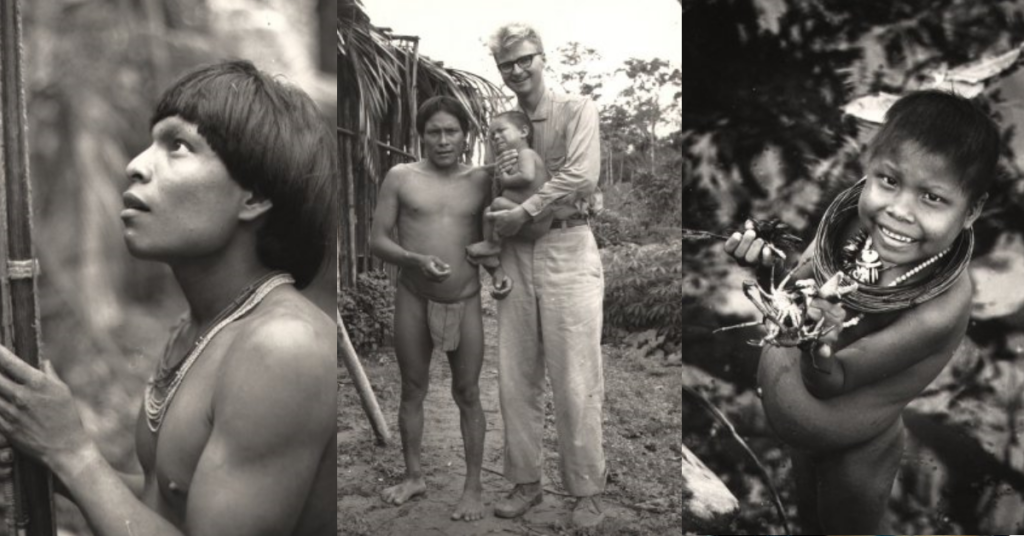
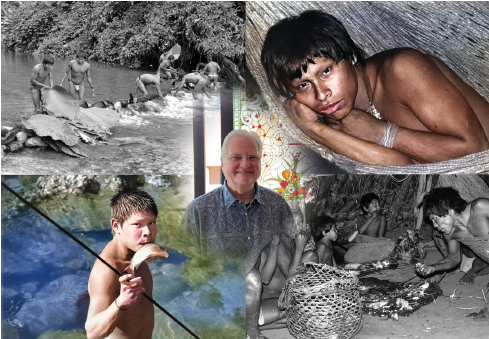
Since 1961, missionary Bruce Olson has labored for the gospel of Jesus Christ among the Motilone Indians deep in the jungles of Colombia’s high Catatumbo region. But today Olson’s most exciting missionary work still lies ahead.
The Motilones called him “Bruchko” because that is how they pronounced his name. Though Olson had no official sponsorship from a missions board or organization, in the ensuing years, he established medical clinics and schools for the tribe. He has translated Scripture into their language, and he has led many of them in accepting Christ as their Savior.
The small yet volatile country of Colombia has long been plagued with escalating problems, including revolutionary uprisings and plundering by drug barons. In the midst of the danger, the turmoil and the cocaine trafficking, Olson has quietly and effectively won the love and respect of the Motilones, and in fact, the entire nation. In his book titled, Bruchko, Olson tells the story of his early years of ministry in Colombia.
Olson lived and worked with the Motilones until October, 1988, when the shocking news came: He had been captured by a band of guerrilla terrorists intent on controlling Motilone territory as part of their strategy for revolution. Bruce was in captivity for nine months and endured constant torture and death threats. During that time he was faced with a firing squad, only to find that the bullets were blanks in an attempt to break him, but it didn’t work.
Finally, one of the guerrilla leaders, Federico, told him that he was released. He told Olson that they had made a mistake when they captured him. He went on to say, “It’s an embarrassment to us that you’ve been held in our camps. If we’ve mistreated you we hope you can find the greatness to forgive us. We’ve decided to leave the Motilones as an autonomous people. We will leave them alone, and you many continue your work among them as before.”
Olson led many of the guerrillas to the Lord. Olson is thankful that God was quietly working out His sovereign will, not only in his life, but in the lives of everyone involved: the Motilones and other tribal peoples, the people of Colombia, the guerrillas, and indeed, people all over the world.
Bruce’s work continues today. More than 30 professionals have graduated from Colombian universities, among which are physicians, accounts, translators, Bible scholars, forest rangers, agronomists, and more than 400 as technical apprentices and high school graduates. All the students are back among their respective communities sharing the expertise of their newly acquired knowledge.
To My Dear and Trusted Friends,
As I sit here listening to the familiar sounds of Colombia—a land that has been my home and my sanctuary for more than six decades—my heart is drawn across the miles to you. In the quiet moments of prayer, when I look back over the long, winding trail that God has allowed me to walk since 1961, yours is one of the first faces that comes to my mind. I am writing to you today simply because my heart is full, and I want to put into words the deep esteem, affection, and gratitude I hold for you and other supporters of my past.
There is an old saying among my Motilone Barí brothers and sisters that life is like walking a narrow trail through the dense jungle. When I first arrived among them, I did not even know how to walk across a fallen, moss-covered log spanning a ravine without slipping. Chief Arabadoyka had to teach me a vital lesson: do not look down at the precipice, and do not look ahead in fear—plant your feet firmly in the moss and keep your eyes fixed on the back of the brother walking in front of you. Over all these decades, my dear friend, you have been one of those steadfast brothers on the trail. Because you stood behind me in prayer, in generosity, and in unwavering trust, my feet never slipped entirely from the path God called me to walk.
Think back with me to 1961. I was just a nineteen-year-old boy from Minnesota with a one-way ticket, seventy dollars in my pocket, and a burning conviction that Jesus Christ was not a Western institution, but the living Creator who wanted to walk the trails of every tribe and tongue. Back then, almost no one believed that a young man without a mission board or institutional backing could survive, let alone reach the jungles along the Catatumbo River. Yet since 1961 right up to this very present day, you have supported me. You did not just support a “project” or a distant mission; you loved me, you trusted me when others doubted, and you bound your heart to mine and to the Barí people. How does one adequately thank a friend for more than sixty years of faithfulness? You were there in spirit during those early years of loneliness, dysentery, and the terror of the first arrows. You stood by me when the outside world only knew the Barí through fear and bloodshed. Indeed, the “Smithsonian Handbook on South American Indians” in earlier edition stated the Motilone Bari are anthropophogos and most violent of all tribes in the Americas. For centuries, outsiders saw only impenetrable jungle and five-foot arrows, assuming that the Barí were beyond reach or redemption.
Yet God saw His beloved children waiting to hear that He spoke their tonal language and understood their hearts. Because of your faithful partnership over the decades, we were able to witness a miracle of grace that only Christ could author. Together—you through your steadfast support, and I here in the bohíos and river valleys—we watched as the Gospel took root not by destroying Barí culture, but by fulfilling it.
When my beloved blood-brother Bobarishora—”Bobby”—first tied his hammock strings to Jesus Christ, and when the tribe heard the Scriptures sung inside their own council fires and in their own tongue, the fear that had governed the jungle for generations broke like the morning mist. A people once feared as the most violent in the hemisphere laid down their vengeance and became ambassadors of peace, forgiveness, and reconciliation.
Every time I think of what followed across the decades, I see your fingerprints upon it:
When we translated the New Testament into the Barí language so that the Word of God could live in their hearts, your prayers and support carried the ink across the pages.
When we established health clinics to push back the epidemics that once decimated the villages, built bilingual schools so the children could learn without losing their heritage, and trained indigenous agronomists and nurses to serve their own people, you were sharing in that harvest.
Even in my darkest hours—such as the nine months in 1988 and 1989 when I was held captive (by Colombian Spanish speaking guerrilla forces) and chained in the jungle—knowing that faithful friends like you were interceding before the throne of God gave me the strength to survive and share the love of Christ with them.
In our modern world, loyalties so often shift with the seasons. People grow weary, priorities change, and friendships fade with distance. Yet from 1961 until today, your hand has never left the plow. You have never asked for recognition or applause. You have given out of a pure, quiet devotion to the Lord and a deep, abiding friendship that has sustained my spirit more times than you will ever know on this side of eternity.
My body does not move down the river trails as quickly as it did when we were young men in 1961, and much of my physical strength has been spent in the mountains and jungles I love. Yet my spirit remains full of joy, and my gratitude for you has only grown deeper and richer with every passing year. In the Barí way of thinking, true friendship is not merely a sentiment spoken with the lips; it is walking the same trail, sharing the same fire, and carrying the same burden until the horizon is reached. You have walked every step of this trail with me.
Please know how deeply I esteem you, how tenderly I cherish your trust, and how earnestly I thank God for the gift of your life. Every Barí child who reads the Scriptures in their mother tongue, every village that lives in peace today, and every neighbouring tribe that has heard the Good News through Barí missionaries is part of your legacy before the Great Creator.
May the Lord Jesus Christ, who has kept us both in His grace since those first days in 1961, pour out His richest peace, health, and comfort upon you and your household. You remain forever in my prayers, in my heart, and in the grateful memory of the Barí people.
With my deepest affection, trust, and lifelong gratitude,
Your brother on the trail, Bruce Olson (author of “Bruchko”)
Listen as podcast host Stephen Strang interviews Bruce Olson on his experiences, and find out how you to can impact the jungles of Colombia.